
Training in Phases: How Endurance Fitness Is Built in Blocks, Not Weeks

From the outside, endurance training often appears repetitive. Weeks of running blend together, mileage rises, and fitness seems to emerge gradually through consistency alone. While consistency is essential, it is not the mechanism that drives improvement. Endurance fitness is built through structured phases, each designed to stress the body in a specific way, and each dependent on the one before it.From a coaching and exercise science perspective, training blocks exist because the body cannot adapt to everything at once. Physiological systems respond best when stress is applied with intent, sequenced over time, and followed by consolidation. Understanding these phases allows athletes to train more effectively, avoid stagnation, and arrive at race day with fitness that is both durable and usable.
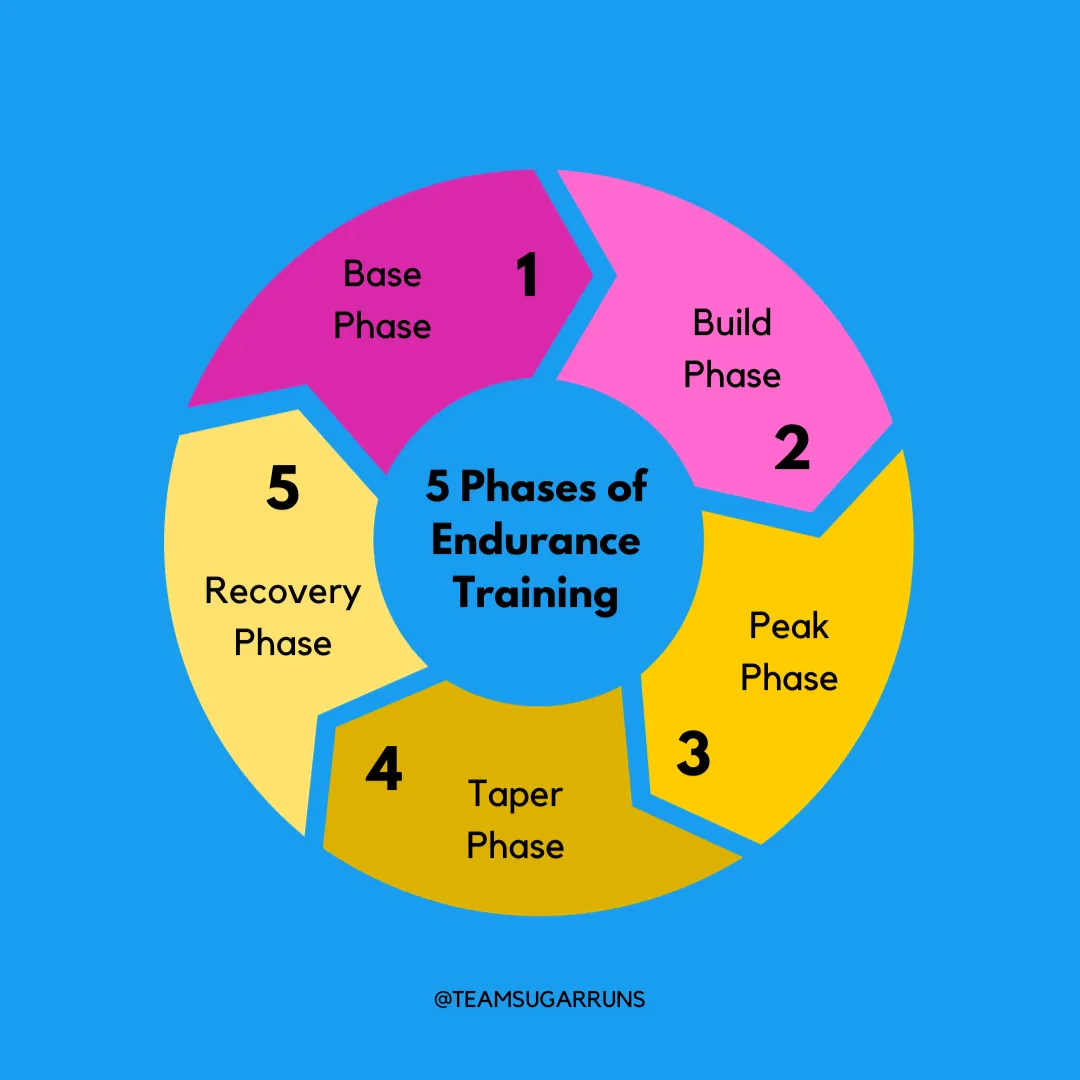
Why Training Needs to Be Organised Into Phases
The human body adapts specifically to the stress it is given. Cardiovascular capacity, muscular endurance, neuromuscular coordination, and connective tissue resilience all adapt at different rates. Attempting to develop all qualities simultaneously leads to diluted adaptation and excessive fatigue.Training phases allow emphasis to shift deliberately. Each phase builds a foundation for the next, creating a progression that is logical rather than reactive. When phases are rushed, skipped, or overlapped indiscriminately, athletes often feel busy but plateau or break down. When phases are respected, fitness compounds.
The Base Phase: Building the Engine and the Chassis
The base phase is where endurance athletes develop the capacity to tolerate training. From a physiological standpoint, this phase prioritises aerobic development, capillary density, mitochondrial efficiency, and connective tissue resilience. It is less about speed and more about durability.Intensity during this phase is deliberately restrained. Easy running dominates, allowing volume to increase without overwhelming recovery systems. This is not because intensity is unimportant, but because the structures that support intensity require time to adapt.From a coaching perspective, the base phase also establishes habits. Consistent pacing, fueling practices, and recovery routines are developed here, long before they are tested under fatigue. Athletes who rush through the base phase often struggle later, not because they lack fitness, but because they lack tolerance.
The Build Phase: Adding Specific Stress
Once a base of aerobic fitness and structural resilience is established, training emphasis shifts. The build phase introduces more specific stress related to the demands of the target event. This may include longer sustained efforts, moderate intensity work, or terrain-specific challenges.Physiologically, this phase improves lactate clearance, muscular endurance, and efficiency at race-relevant intensities. Volume may stabilise or increase slightly, but intensity becomes more purposeful. Importantly, intensity is layered onto an existing aerobic foundation rather than replacing it.From a coaching standpoint, the build phase is where athletes begin to feel “fitter”. This can be deceptive. While confidence often rises, fatigue also accumulates. Managing recovery becomes more important as the margin for error narrows. Athletes who push too aggressively during this phase often compromise the final stages of preparation.
The Peak Phase: Converting Fitness Into Performance
The peak phase is not about building new fitness. It is about sharpening what already exists. Training becomes highly specific, targeting race pace, race duration, and race conditions. Volume is often slightly reduced, while intensity is carefully controlled.From an exercise science perspective, this phase refines neuromuscular coordination and improves economy at race-relevant efforts. It also serves as a rehearsal period, allowing athletes to practise fueling, pacing, and decision-making under realistic conditions.The key coaching challenge in the peak phase is restraint. The temptation to “test” fitness is strong, but the risk of carrying fatigue into the taper increases. Sessions should feel purposeful rather than exhausting. Confidence should come from execution, not exhaustion.
The Taper: Allowing Adaptation to Surface
The taper is often misunderstood as a loss of training stimulus. In reality, it is the phase where accumulated adaptations are finally expressed. Training load is reduced to allow fatigue to dissipate while maintaining enough stimulus to preserve fitness.Physiologically, the taper restores glycogen stores, reduces muscle damage, and improves neuromuscular responsiveness. From a coaching perspective, it is a psychological transition as much as a physical one. Athletes must learn to trust that fitness is not lost in days or weeks, but fatigue can be.The effectiveness of the taper depends entirely on the quality of the phases that preceded it. A taper cannot compensate for a rushed base or an overreached build phase. It simply reveals what is already there.
How the Phases Depend on One Another
Training phases are not interchangeable. Each phase prepares the body for the stress of the next. Skipping or compressing phases often leads to short-term gains and long-term limitations.A weak base limits how much intensity can be tolerated later. An overly aggressive build phase increases injury risk and reduces peak quality. A poorly executed taper fails to reveal fitness, regardless of how hard the athlete trained.From a coaching perspective, this interdependence is why long-term planning matters more than any single session. Fitness is not built in isolation. It is built through a sequence.
Why Many Athletes Feel Fit But Not Ready
A common experience among endurance athletes is feeling physically fit but unable to perform on race day. Often, this is not a failure of effort, but of structure. Training that lacks clear phases may improve general fitness without developing race-specific readiness.Readiness emerges when aerobic capacity, muscular endurance, neuromuscular coordination, and recovery align at the right time. This alignment does not happen by chance. It is the result of deliberate sequencing.
Training Blocks as a Long-Term Skill
Understanding training phases changes how athletes interpret their training. Easy periods are no longer seen as wasted time. Hard phases are respected rather than chased. Rest becomes purposeful rather than reactive.From both a coaching and exercise science standpoint, this perspective shifts training from accumulation to construction. Fitness is not something you chase. It is something you build, layer by layer.Endurance success belongs to athletes who respect process over urgency. Training blocks are not constraints. They are the framework that allows adaptation to occur.


